Hardware Procurement in a Volatile Market: Why Flexibility Matters More Than Ever
Price movements, supply constraints and longer lead times mean the exact device you want isn't always available. Here's how to build flexibility into your hardware procurement strategy without lowering your standards.

Hardware procurement has become increasingly difficult for Australian businesses.
Price movements, supply constraints and longer vendor lead times mean that securing the exact device specification a business wants is no longer always straightforward. Even when a product appears available at the time of quotation, stock can change quickly and delivery timeframes may shift after an order is placed.
For IT teams and business decision-makers, this creates a difficult balance between securing the preferred specification, controlling costs and delivering equipment when employees actually need it.
Based on our experience working directly with clients, distributors and major technology vendors, the most successful approach is often to find the right middle ground.
The Perfect Specification May Not Be the Best Procurement Decision
Most businesses have a preferred hardware standard.
This may include a specific processor, memory configuration, storage capacity, screen size, warranty and device model. Standardisation is important because it makes deployment, support and lifecycle management easier.
The challenge is that a highly specific configuration may have limited availability.
Waiting for the exact model can lead to:
- Extended delivery delays
- Uncertain stock allocation
- Project or onboarding delays
- Higher replacement costs
- Expired pricing
- Orders being cancelled or unable to be fulfilled
In some cases, a business may wait several weeks for an order, only to be advised that the vendor can no longer supply the product. By that time, the original pricing may no longer be available and the replacement option may cost more.
This is why availability should now be treated as a key part of the specification—not something considered after the product has been selected.
Find the Middle Ground
The most practical procurement strategy is to identify which requirements are essential and which have some flexibility.
For example, a business may require:
- A current-generation business laptop
- At least 16GB or 32GB of memory
- A 512GB solid-state drive
- Windows 11 Pro
- A three-year commercial warranty
- USB-C docking compatibility
The exact model or processor variant may be less important if an available alternative meets the required performance, security and support standards.
A slightly different device that can be delivered reliably within a reasonable timeframe may be a better business decision than waiting indefinitely for the preferred model.
The goal is not to compromise quality. It is to avoid over-specifying areas that do not materially affect the employee's work.
Separate Essential Requirements from Preferences
Before requesting a quote, classify requirements into three groups.
Non-negotiable
These are the features the employee or business genuinely requires.
Examples may include memory, storage, operating system, warranty, graphics capability or compatibility with a particular application.
Preferred
These are important, but an equivalent alternative may be acceptable.
Examples may include a specific processor series, device generation, chassis design or manufacturer model.
Optional
These are features that would be useful but should not delay the purchase.
Examples may include a particular colour, minor weight difference or a specific port configuration that can be addressed through a dock or adapter.
This approach gives procurement teams and technology partners enough flexibility to identify suitable alternatives without lowering the overall standard.
Availability and Pricing Are Connected
Hardware quotes often have limited validity because vendor pricing and stock availability can change quickly.
When a suitable product is available, delays in approval can create additional risk. Stock may be allocated to another customer, promotional pricing may end or the distributor's replacement shipment may arrive at a higher cost.
This does not mean businesses should approve purchases without proper review. It means the approval process should match the pace of the current market.
For planned refreshes, it is useful to agree on:
- Approved device standards
- Acceptable substitute specifications
- Budget thresholds
- Approval authorities
- Required delivery timeframes
This allows purchasing decisions to be made faster when the right stock becomes available.
Build Flexibility into Your Hardware Standard
A hardware standard should guide procurement without becoming so restrictive that it prevents the business from buying suitable equipment.
Rather than approving only one exact model, consider approving two or three equivalent options from a preferred vendor or across multiple manufacturers.
For example:
- Standard business laptop
- Premium mobility laptop
- Performance laptop
Each category can have minimum specifications, warranty requirements and an approved price range.
This maintains consistency while improving the likelihood of securing stock.
Key Takeaways
- Exact hardware configurations are becoming harder to secure consistently.
- Product availability should be considered alongside price and specification.
- Separate non-negotiable requirements from preferences.
- Approve equivalent models that meet the same business outcome.
- Avoid delaying decisions when suitable stock is available.
- Build flexibility into device standards and procurement policies.
- Consider the cost of delayed onboarding and employee downtime—not only the device price.
Final Thoughts
In a volatile hardware market, successful procurement is no longer only about finding the best specification at the lowest price.
It is about finding a reliable balance between performance, cost, availability and delivery time.
Businesses that remain flexible and make decisions based on essential requirements are more likely to secure suitable technology, avoid unnecessary delays and reduce the risk of paying more later.
Need Help Planning Your Next Hardware Purchase?
HUB ICT works with leading vendors and distributors to help Australian businesses source suitable hardware, assess available alternatives and manage procurement with greater certainty.
Speak with HUB ICT about building a practical and flexible hardware procurement strategy.
More from Blogs
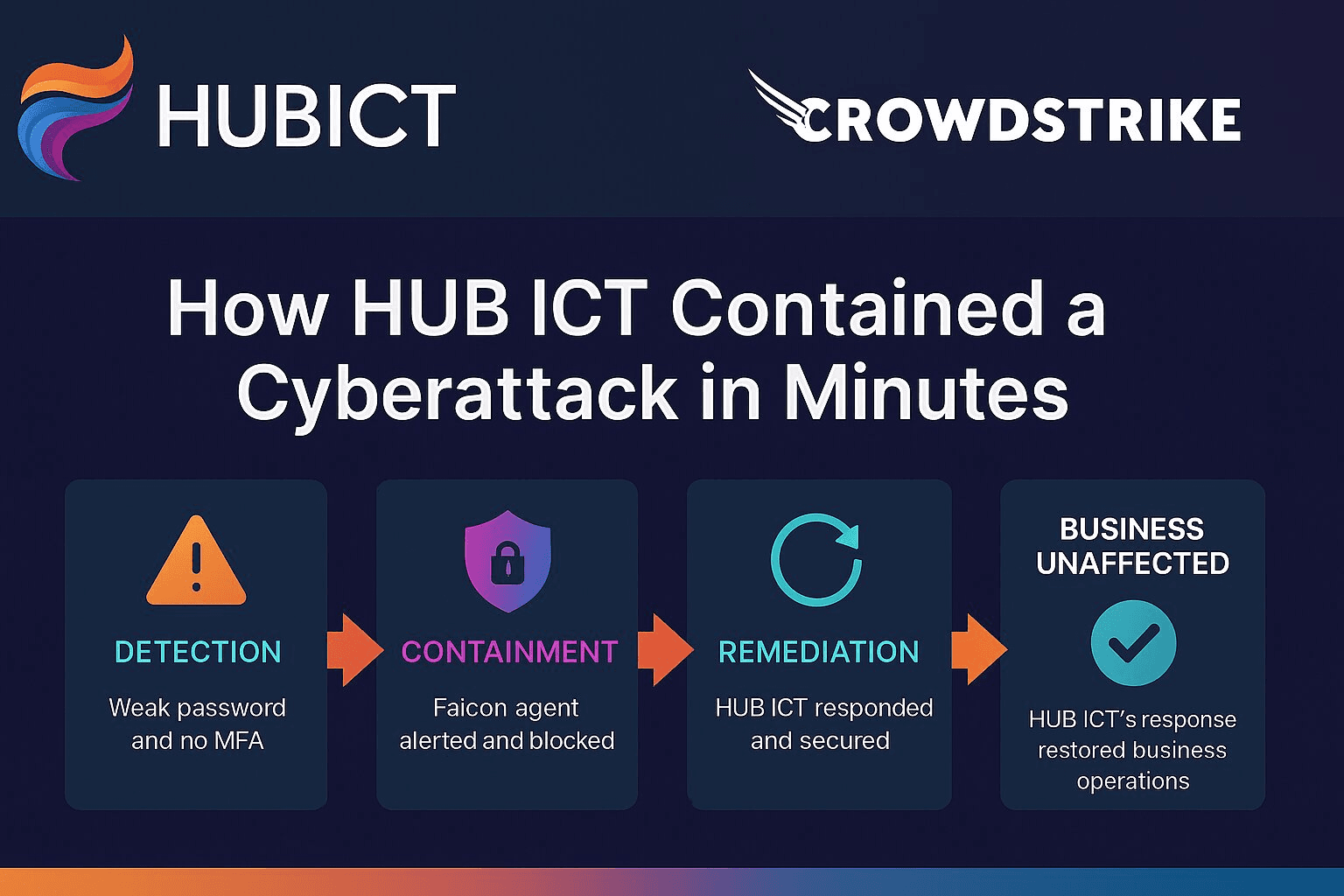
Balancing Cybersecurity Costs and Reality: How HUB ICT Contained a Cyberattack
Learn how HUB ICT's hybrid cybersecurity model successfully contained a sophisticated cyberattack in minutes, proving that strong security doesn't have to break the budget.

Stop Overspending on Microsoft CSP: How to Save Up to 15% on Microsoft 365 Licensing
Discover how businesses are unknowingly overspending on Microsoft CSP licenses and learn proven strategies to optimize your licensing costs.

IT Budget Planning: A Practical Guide for Business Decision-Makers
Learn how to build a smarter IT budget that supports your business goals. This practical guide covers planning for hardware, software, cybersecurity, and future growth while helping you reduce unexpected technology costs.
Have a licensing or procurement problem worth solving?
Tell us what's going on. It might be a five-minute answer, or it might be a proper review.
Book a Consultation